I'm very thankful for the opportunities that have come my way. Being a full-time graduate student was always a dream of mine. Even better, I was offered an assistantship to teach while studying. The best part - tuition remission. How amazing is it to continue your education for free?! I'm incredibly grateful and don't want to down play that.
However, there are some things that they don't tell you about being a full-time graduate student.
Sometimes it feels like you're on pause. As someone who left a position teaching full-time, it doesn't feel like I'm working. Don't get me wrong, I AM working. But when you're taking classes and only teaching 1 or 2, it feels like you're not doing anything. I'm ready to get my life going again! I never in a million years would have thought that I didn't want to always be a full-time student. However, I've come to learn that. My initial plan after my M.A. was to pursue my Ph.D. full-time. I now know that there is NO WAY! I'm ready to get a job, start working, and begin developing my life.
Sometimes it feels like you're behind. You see everything that your Facebook "friends" are doing and it makes you feel incomplete. Everyone and their mother is now having a baby. Everyone is now engaged. Everyone is out and about loving their lives. Don't get me wrong, I quite enjoy my life. But, I am now single and still in school. It sometimes feels like the life marks are way out of reach. But that's okay, our culture needs to value singleness. After all, right now is the time when I can do anything I want with no repercussions.
Sometimes it feels like you're ahead. This obviously isn't bad, but it is true. You realize that you really have accomplished a TON in your life... but what do you have to show for it? You were up for tenure. You received numerous scholarships. You were offered an assistantship. You presented at conferences. You even worked on a book published by Oxford Journals. I don't know. It just seems like all of these accomplishments should work toward something. In the future they will, but right now nothing is a brewin'.
With all of that aside, I'm 100% confident in my decision to leave my job and pursue my M.A. If you can swing it financially, do it! You will definitely dig deeper into your content area. And hey, you'll probably find out what you like and don't like. And that's really what every experience is about.
Tuesday, June 24, 2014

Monday, June 23, 2014
Graduating
This weekend I attended the graduation ceremony at National Louis University in downtown Chicago. My uncle was graduating with his Ph.D. so needless to say it was an exciting time! We were all so proud of him. This is something that he had wanted for his entire adult life. To finally reach that point must have been so exhilarating.
For me though I never felt a huge accomplishment when I graduated high school or college. I don't even think that I'll feel like I've made big strides when I finish my Master's degree next Spring. At the risk of sounding insensitive, I never truly understood why graduation was such a big deal. You see everyone in my family has a higher education degree. I grew up not knowing anything different.
But at this graduation ceremony, the president of the university asked all first generation college students to stand up. She also included graduates who had reached the highest degree in their family.
At least 75% of the graduates stood up and the crowd went wild.
I felt a sense of pride from the families that was so touching. My eyes even welled up with tears a little bit. It was quite exciting to hear the crowds cheering, yelling, clapping, hooting, and hollering.
I don't know if I'll ever feel that way about graduating myself but I should. I should recognize the amazing feat it is to continue one's education. I should appreciate the hard work that myself, my family, and my friends have put in in order to get to where they are in life. I still don't think college is for everyone and that we, as teachers, shouldn't push everyone into thinking that college is the only option. There plenty of successful individuals who don't have college degrees. Some are in the trades, running their own businesses, and much more. And that's amazing!
But with that thought aside, I now realize what it means to attend and complete college.
Congratulations, Graduates! You did it!
For me though I never felt a huge accomplishment when I graduated high school or college. I don't even think that I'll feel like I've made big strides when I finish my Master's degree next Spring. At the risk of sounding insensitive, I never truly understood why graduation was such a big deal. You see everyone in my family has a higher education degree. I grew up not knowing anything different.
But at this graduation ceremony, the president of the university asked all first generation college students to stand up. She also included graduates who had reached the highest degree in their family.
At least 75% of the graduates stood up and the crowd went wild.
I felt a sense of pride from the families that was so touching. My eyes even welled up with tears a little bit. It was quite exciting to hear the crowds cheering, yelling, clapping, hooting, and hollering.
I don't know if I'll ever feel that way about graduating myself but I should. I should recognize the amazing feat it is to continue one's education. I should appreciate the hard work that myself, my family, and my friends have put in in order to get to where they are in life. I still don't think college is for everyone and that we, as teachers, shouldn't push everyone into thinking that college is the only option. There plenty of successful individuals who don't have college degrees. Some are in the trades, running their own businesses, and much more. And that's amazing!
But with that thought aside, I now realize what it means to attend and complete college.
Congratulations, Graduates! You did it!
Friday, June 20, 2014
Chatting with Students: The New Form of Raising Your Hand
I used to be slightly afraid of technology. Not of technology itself. After all, I grew up on technology. I hardly remember not having a cell phone. I was afraid of the trouble it could get me into. There are so many things that can go wrong with technology in the classroom. The least frightening, it just doesn't work. The most frightening, students writing something inappropriate online directed at myself or another student.
Recently I stopped giving into the fear and decided to embrace technology. I'm currently obsessed with using Google Documents in my classroom. I have the students open up a document, share it with me, and give me commenting rights. I do this for two reasons:
(1) I can see what they're writing about. I don't have to constantly walk around the room looking over their shoulders. Instead, I look over their shoulders from the comfort of my own seat. I'm not lazy but it is way easier. Plus there isn't that frantic switching of tabs when I walk around. Now, I can watch them type like a stream-of-conscience.
(2) The chat feature is amazing. About 1-2 paragraphs into their writing, I start asking them questions. I will either write it in the chat box or directly comment on the essay. However, it's not my questions that I love. I love that they respond back with their own questions. I really enjoy seeing the tab of their page blinking. There's a nice little inquisitive question just waiting for me to unwrap.
Using the chat feature on Google Docs allows students to ask me question without having to raise their hand and embarrassingly call me over. Even better, I can put links in the chat box to direct them to webpages that will help them specifically with the problem that they're having. For example, a student of mine couldn't figure out how to get started. I let him brainstorm for about 5-10 minutes before I asked him how his progress was going. He was honest and said not well. So I sent him a link to a page talking about summaries. I also created a sentence frame for him and typed it directly in his document. It was instant differentiation without having to prepare. I saw the problem and I helped him address it. Later on, I asked him how he was progressing and he wrote back that he was doing much better. He never had to raise his hand. He never had to call me over.
The fact of the matter is, sometimes students don't ask questions because they're embarrassed or there is too much rig-a-ma-role (is that how you spell it??). Using the chat feature allows us to help students by eliminating both of those steps. I implore you to try this in your class. If you feel the need, set some ground rules. Your students will love the opportunity to connect with you without... well, connecting with you.
Recently I stopped giving into the fear and decided to embrace technology. I'm currently obsessed with using Google Documents in my classroom. I have the students open up a document, share it with me, and give me commenting rights. I do this for two reasons:
(1) I can see what they're writing about. I don't have to constantly walk around the room looking over their shoulders. Instead, I look over their shoulders from the comfort of my own seat. I'm not lazy but it is way easier. Plus there isn't that frantic switching of tabs when I walk around. Now, I can watch them type like a stream-of-conscience.
(2) The chat feature is amazing. About 1-2 paragraphs into their writing, I start asking them questions. I will either write it in the chat box or directly comment on the essay. However, it's not my questions that I love. I love that they respond back with their own questions. I really enjoy seeing the tab of their page blinking. There's a nice little inquisitive question just waiting for me to unwrap.
Using the chat feature on Google Docs allows students to ask me question without having to raise their hand and embarrassingly call me over. Even better, I can put links in the chat box to direct them to webpages that will help them specifically with the problem that they're having. For example, a student of mine couldn't figure out how to get started. I let him brainstorm for about 5-10 minutes before I asked him how his progress was going. He was honest and said not well. So I sent him a link to a page talking about summaries. I also created a sentence frame for him and typed it directly in his document. It was instant differentiation without having to prepare. I saw the problem and I helped him address it. Later on, I asked him how he was progressing and he wrote back that he was doing much better. He never had to raise his hand. He never had to call me over.
The fact of the matter is, sometimes students don't ask questions because they're embarrassed or there is too much rig-a-ma-role (is that how you spell it??). Using the chat feature allows us to help students by eliminating both of those steps. I implore you to try this in your class. If you feel the need, set some ground rules. Your students will love the opportunity to connect with you without... well, connecting with you.
Thursday, June 19, 2014
Oops I Did It Again: Reflecting on My Own Sarcasm
I’m sarcastic by nature.
In my family, we call it the “Allen” gene. It’s a sense of humor that has been passed
down from generation to generation. To
be quite honest, I love it. I love
sitting around the living room and hearing quick witted jokes spat back and
forth. It’s the trade mark of my family.
When it comes to teaching, though, I try to keep my sarcasm
to a minimum. Try as I might, sometimes
it slips out. Remember in the movie Mean Girls when Cady had word
vomit? She would tell someone’s secrets
before she even realized that they were coming out of her mouth? That’s what it’s like for me sometimes. There are occasions when I feel sarcasm
bubbling inside of me and it escapes before I have the chance to think it
through.
Today was one of those terrible occasions.
Today, I accidentally made fun of a student. Luckily the student took it like a pro. In general, he is always cracking jokes and
poking fun in class. He let it roll off his back simply by making a “if you can dish it, you gotta take it” sort of a
comment.
Even though it was completely accidental and the student let
it roll off of his back (and we were being let out for the day), I felt
horrible. I couldn’t get the sting of my
own comment out of my head. I never want
to make a student feel bad about themselves or be embarrassed in my class. School should be an environment where the
people around lift you up and encourage you.
It should be a safe place where you can feel comfortable to ask
questions and grow into yourself.
I once read that sarcasm is a higher order thinking
skill. Who knows if that is actually
true, but I prefer to think that it is.
If that’s the case, then it’s easy for me to place blame on others who
just “don’t get it”. In reality, though,
it’s just mean. Sarcasm is only
something that works if the two people have a very close relationship or if
they are both relatively confident in themselves. As teachers, we know that these aren’t
characteristics that define schools and their students.
As I was driving home from school, still obsessing over my
sarcastic and rude comment, I realized something. More likely than not, that student had
probably already forgotten I said anything.
I highly doubt that he was sitting in his own car pining over the
comment I made, why I made it, and how it hurt his feelings. I was making this more about me. I was letting my ego take over.
So here’s the decision I’ve made. I’ll go back to school tomorrow not
mentioning it. I’ll continue to act as I
normally do, paying special attention to not
say anything sarcastic. I’ll be sure to
be kind and assuring to the student that I was sarcastic toward the day
before. If the student is upset about it,
which he probably isn’t, my behavior should set him at ease. If he wants to talk about it, I’ll be more
than happy to apologize for what I said.
The main thing is this: I don’t need to make it a big deal.
I guess what I’m trying to say is, calm down. We all say things
that get us in hot water. It happens all
of the time in our personal lives and in our work lives. We need to be able to brush it off and move
on. If a conversation happens, own up to
it and then let it go. Relax. Being a teacher is tough work. Perhaps with all of the punches that roll our
way, we shouldn’t be surprised when a little sarcasm bubbles up and out every
once and a while.
Wednesday, June 18, 2014
Should We Be Teaching Phonetics in K12?
Phonics you say? Nope. Not phonics. I'm pretty sure Hooked on Phonics screwed me over for life. To this day I read aloud in my head. I literally cannot read with out hearing my own voice say the words out loud in my head. It's kinda sad actually. I know many people who just read, without hearing voices, and understand the information. It's magical. I cannot even begin to understand what that would be like.
But we're not talking phonics here. We're talking phonetics.
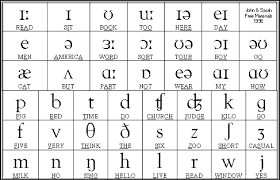
What is phonetics you might ask. Phonetics is the study and classification of speech sounds. There are two major phonetic alphabets, the International Phonetic Alphabet (IPA) and the American Phonetic Alphabet (APA). The difference between these alphabets and the alphabet we teach in school is that each symbol only represents one sound.
How is that different you might ask? Well, for our traditional alphabet, the letter k can represent several sounds. It might be silent... it be be vocalized. Don't even get me started with the vowels. The vowel a can be long and short... and I still don't understand the difference. Depending on what word it is in and where it is placed within that word, it would be pronounced differently. With the phonetic alphabet, each symbol represents one and only one sound. It's a simpler system to learn.
Even better, the article "Texting Improves Children's Spelling and Grammar" discusses a study that found "Texting may improve children’s spelling and grammar because using abbreviations such as ‘gr8’ makes them think about language phonetically." While texting itself is not using the phonetic alphabet, it is more centered around sounds. By using abbreviations in texting, students and adults are thinking more deeply about language and it's patterns. Isn't that a good thing?
So why not allow text lingo in school? Why not teach the IPA alongside or even before the traditional English alphabet? Obviously others argue that it is not as practical. These people would say that it doesn't prepare them for the Standard American English that they need to use in college and the work place. True, but is that a legitimate argument against teaching IPA in addition to the traditional English alphabet? Probably not. We should encourage deep, critical thinking not just memorization. When students are learning and using the IPA and/or text lingo, they are examining their knowledge about language and learning the patterns that exist in their language. More so, it's an equalizer between native English speakers and English Language Learners. If all the IPA does is focus on sounds and their patterns, native speakers and language learners should be on more of an even playing field. Both can examine sounds in any language. After all, that's one way they know the difference between their language and another.
Perhaps we do need to start teaching the IPA in American schools. It seems as though the cognitive, social, and academic benefits outweigh the cons. Well...we should at least start with allowing text lingo in our classes.
But we're not talking phonics here. We're talking phonetics.
What is phonetics you might ask. Phonetics is the study and classification of speech sounds. There are two major phonetic alphabets, the International Phonetic Alphabet (IPA) and the American Phonetic Alphabet (APA). The difference between these alphabets and the alphabet we teach in school is that each symbol only represents one sound.
How is that different you might ask? Well, for our traditional alphabet, the letter k can represent several sounds. It might be silent... it be be vocalized. Don't even get me started with the vowels. The vowel a can be long and short... and I still don't understand the difference. Depending on what word it is in and where it is placed within that word, it would be pronounced differently. With the phonetic alphabet, each symbol represents one and only one sound. It's a simpler system to learn.
Even better, the article "Texting Improves Children's Spelling and Grammar" discusses a study that found "Texting may improve children’s spelling and grammar because using abbreviations such as ‘gr8’ makes them think about language phonetically." While texting itself is not using the phonetic alphabet, it is more centered around sounds. By using abbreviations in texting, students and adults are thinking more deeply about language and it's patterns. Isn't that a good thing?
So why not allow text lingo in school? Why not teach the IPA alongside or even before the traditional English alphabet? Obviously others argue that it is not as practical. These people would say that it doesn't prepare them for the Standard American English that they need to use in college and the work place. True, but is that a legitimate argument against teaching IPA in addition to the traditional English alphabet? Probably not. We should encourage deep, critical thinking not just memorization. When students are learning and using the IPA and/or text lingo, they are examining their knowledge about language and learning the patterns that exist in their language. More so, it's an equalizer between native English speakers and English Language Learners. If all the IPA does is focus on sounds and their patterns, native speakers and language learners should be on more of an even playing field. Both can examine sounds in any language. After all, that's one way they know the difference between their language and another.
Perhaps we do need to start teaching the IPA in American schools. It seems as though the cognitive, social, and academic benefits outweigh the cons. Well...we should at least start with allowing text lingo in our classes.
Tuesday, June 17, 2014
Reflections & Collages
I've never been one to use journal entries in class. I thought it was just a time killer - something the teacher could use to fill time while they took attendance. However, this year I've been using journal entries to prepare students for a final reflection. Surprisingly, it's been going well!
It's been sparking a ton of debate in my class! Today, the journal prompt was "In five years I will be...." and the students got to write about whatever they wanted.
Afterwards, we discussed the responses. Sad to say but some of them were a little bit depressing. One of my students said, "In five years I plan to be paying off student loans..." Another said, "In five years I plan to be working two jobs so that I can pay off my college debt..."
At least they're being realistic?? It created a real honest conversation about college, finances, and the reality of the world that we live in. We even got into the inequality between professor pay and administrator pay. The students, as you would imagine, had quite a lot to say. Much of it was well founded too!
Regardless of how outrageous it is that those were their genuine responses, I quite enjoyed utilizing journal prompts. I'll continue to do so moving forward too! So, I put together a unit of 14 journal prompts and 1 essay prompt - all of which rely on one another.
It's been sparking a ton of debate in my class! Today, the journal prompt was "In five years I will be...." and the students got to write about whatever they wanted.
Afterwards, we discussed the responses. Sad to say but some of them were a little bit depressing. One of my students said, "In five years I plan to be paying off student loans..." Another said, "In five years I plan to be working two jobs so that I can pay off my college debt..."
At least they're being realistic?? It created a real honest conversation about college, finances, and the reality of the world that we live in. We even got into the inequality between professor pay and administrator pay. The students, as you would imagine, had quite a lot to say. Much of it was well founded too!
Regardless of how outrageous it is that those were their genuine responses, I quite enjoyed utilizing journal prompts. I'll continue to do so moving forward too! So, I put together a unit of 14 journal prompts and 1 essay prompt - all of which rely on one another.
Feel free to go check it out by clicking the image above! I'd love to hear what kinds of journal prompts you have all used in class. Which were the most effective? Least effective?
Monday, June 16, 2014
Hot Secrets: What I've Noticed From Teaching Summer School
I'm already half way through teaching my first of two semesters for summer school. I can't believe at how slow and quick it has gone. Four hours and fifteen minutes is a long time to do anything, let alone sit in a class.
So here are the 5 things I've learned so far:
1. Everyone is just biding their time. We hate to think it as teachers but, yes, they're there because they have to be. More often than not, they're there because they have failed. All of this means that they want to get in, get out, and get gone. That's fine! Design your summer school curriculum that way. It doesn't make you a bad teacher!
3. My students respond well to routine schedules. I have the same schedule every day. Grammar - Journal - Research - Writing - Revision. Students know what to expect when they come in. They get straight to work and are able to become better at each task the more frequently they do it. By the third or fourth day, you won't have to explain directions on how to do something... such as writing a basic paragraph. Instead, you can spend time helping individual students at their own level.
So here are the 5 things I've learned so far:
1. Everyone is just biding their time. We hate to think it as teachers but, yes, they're there because they have to be. More often than not, they're there because they have failed. All of this means that they want to get in, get out, and get gone. That's fine! Design your summer school curriculum that way. It doesn't make you a bad teacher!
2. Students like the leeway. Teach only what they need to know and find a way to give students autonomy. For me, that's pretty easy. Autonomy is almost synonymous with composition. Regardless, I let them pick their partners, topics, sources, etc. If I can give them choice and guide their learning, that's an efficient and effective way to spend my 14 days.
3. My students respond well to routine schedules. I have the same schedule every day. Grammar - Journal - Research - Writing - Revision. Students know what to expect when they come in. They get straight to work and are able to become better at each task the more frequently they do it. By the third or fourth day, you won't have to explain directions on how to do something... such as writing a basic paragraph. Instead, you can spend time helping individual students at their own level.
4. Don't give out homework. Like I said, they're biding their time. In my opinion, if we can get the work done in class, then that's what we should do. Instead of having them write an entire research paper outside of class, I have them write it in chunks during class time. We're already covering an entire semester's worth of content in 14 days. Don't make this harder than it already is.
5. Give extra credit. I give one extra-credit worksheet each day. It's only worth 6 points and it ties into what we're working on with each unit. Not everyone will do it but it's nice to give them the option. Remember, this is a credit recovery summer school course - they need and want the choice.
These are just 5 of the many things that I've learned in the past 6 days. Have you ever taught summer school? If so, what have you learned? Comment below.
As always, if you enjoyed this post or found it helpful, please like using an icon and follow!
Subscribe to:
Posts (Atom)